Navratri Stories Across India for Kids
When Sharad Ritu arrives, festivals light up every corner of India. It is the time of Navratri—nine nights dedicated to celebration, tradition, and divine grace. If you travel across India during these nine days, you will find four completely different worlds. This four-part series post Navratri stories across India for kids, brings the unique traditions of the East, West, North, and South alive through the joy of reading.
To help young readers discover this kaleidoscope of Indian heritage, I created four Navratri stories for kids under Banana Leaf Tales.
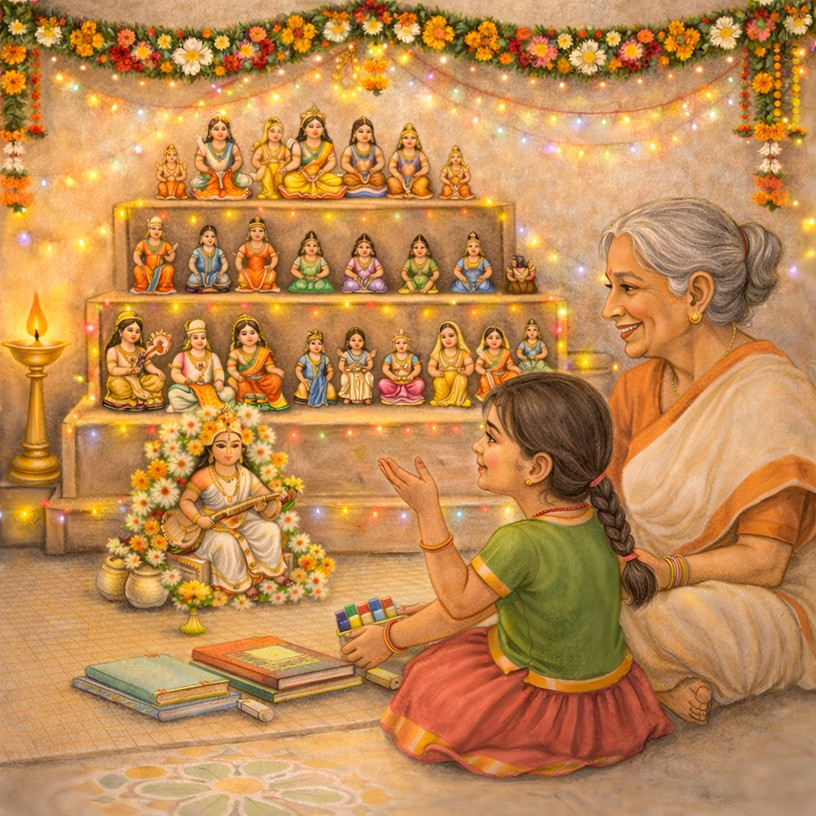
- In the South, homes turn into quiet galleries of dolls arranged on stepped stands called Golu / Kolu.
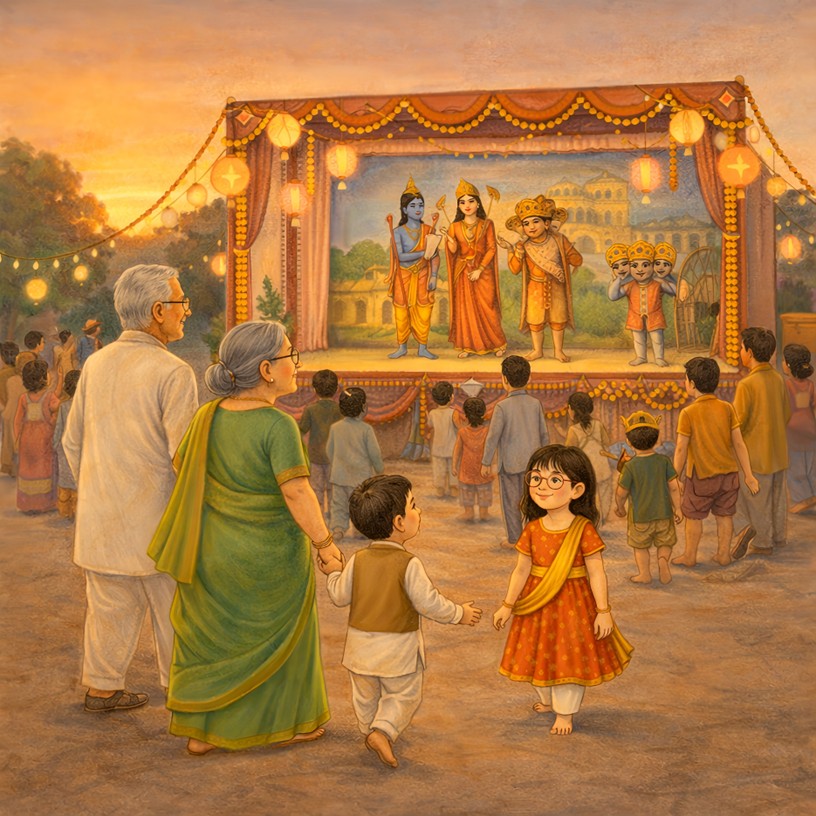
- In the North, open fields buzz with theatre, vibrant costumes, and dramatic enactments of ancient epics through Ramlila.
- In the East, the thunderous roll of drums (dhaak) welcomes the goddess like an elder daughter returning to her maternal family and Durga Puja.
- In the West, concentric circles of swirling dance forms known as Garba and Dandiya turn the night into a festival of rhythm and unity.
While the customs, food, and music change from region to region, one golden truth remains unchanged: good always wins over evil, and joy multiplies when shared across generations.
Here is a peek into stories on each region’s celebration and the timeless “how and why” behind each story.
The four books of Navratri Stories Across India for Kids
The South: Stepped Stories and Whispering Dolls
The Kolu That Came Alive: Bommai Kolu (or Golu), where families set up tiered wooden steps adorned with clay, brass, and wooden dolls. Young Tanvi helps her beloved Patti (grandmother) carefully unpack and arrange the Kolu / Golu.
As evening falls, the magic deepens—the traditional dolls Durga, Krisha and the bustling Chettiar shopkeeper dolls begin whispering their timeless stories right in Tanvi’s dreams.
Through a casual conversation between Tanvi and Patti, children get to learn why we arrange dolls on steps in a specific way, that every step holds a sacred meaning and the concepts behind celebrations of Saraswati Puja (honouring books, tools, and learning) and Vijayadasami (new beginnings).
The North: The Grand Stage Under the Night Sky
Ramlila in Rampuri Ramlila, the vibrant, nine-night folk theatrical enactment of the Ramayana leading up to Dussehra.
Siblings Tia and Avyan walk through the glowing, festive streets of Rampuri alongside their grandparents. Through booming drums, glittering costumes, and street-corner theatre, they follow the adventures of Rama, Sita, and Lakshmana until the final burst of festive fireworks.
Why do communities gather night after night to watch a story everyone already knows by heart? Because Ramlila is not just a performance; it is a community tradition where timeless values are passed down in person. It gently shows children that real strength lies not in boasting or arrogance, but in humility, kindness, and standing up for truth.
The East: Rhythm of the Dhaak and an Open-Hearted Welcome
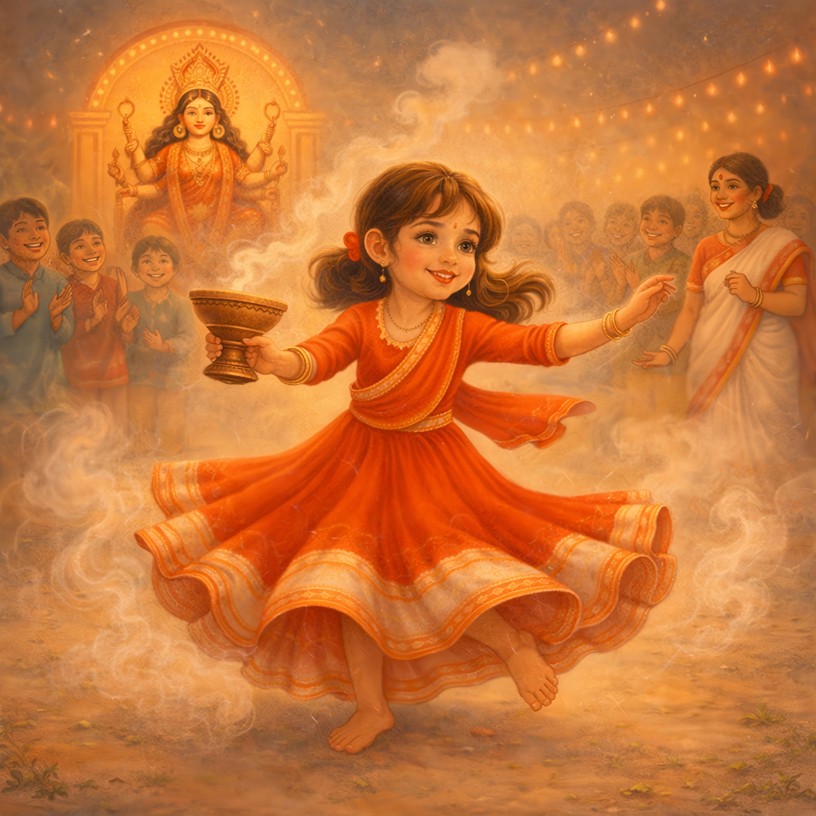
Little Pihu and Her Durga Ma Durga Puja, the grand welcome of Goddess Durga to earth, celebrated with illuminated pandals, Dhunuchi dance, and community feasts.
In the bustling heart of Kolkata, wide-eyed little Pihu wonders about Durga Ma: “How will she come? Does she know the way?” She imagines guiding Ma Durga through the city with the aroma of hot rasgullas and the hypnotic rhythm of the dhaak drums.
Let our children learn that in Eastern tradition, Durga Ma is not just a distant, awe-inspiring deity—she is welcomed warmly as a daughter visiting her maternal home with her children (Saraswati, Lakshmi, Ganesha, and Kartikeya). Pihu’s innocent journey introduces young readers to the smoke-swirling dhunuchi dance, community pandals, and the inspiring realization that courage and fierce love reside inside every child.
The West: Twirling Swirls and Dandiya Dreams
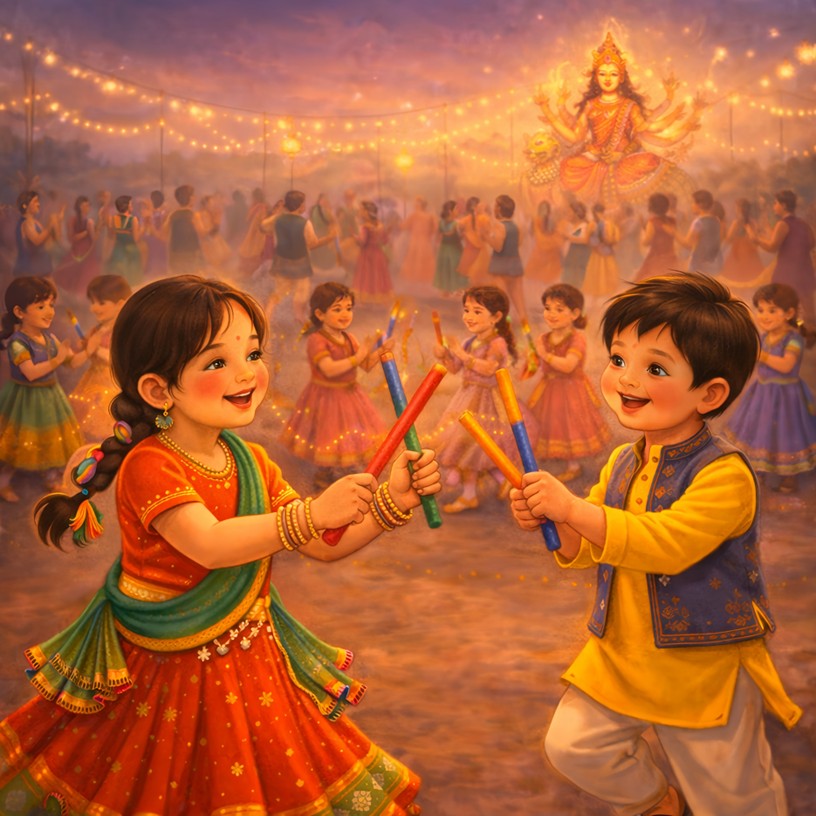
Navratri Nights: Garba Glows and Dandiya Dreams Garba and Dandiya Raas, the exuberant folk dances of Gujarat have become universal dance forms during Navratri.
Siblings Avni and Arjun dress in mirror-work traditional clothes and step into open grounds bathed in golden lantern light. With sticks in hand and smiles on their faces, they learn to synchronize their steps with the beat of the dhol.
Why do we dance in ever-expanding circles during Garba and what does every click of the Dandiya stick mean? Children learn about the cycle of time and life, where everyone—young, old, beginner, or pro—dances shoulder to shoulder as equals. It shows children rhythm, patience, coordination, and the uplifting joy of moving in harmony with one’s community.
Bringing the Wonder of Navratri Home
Festivals come alive for children not through lectures, but through tactile, shared moments: curling up with a physical book, pointing at colourful illustrations, and asking questions across the dining table.
Whether your family sets up a Kolu, claps to the rhythm of Garba, stands under the fireworks of Ramlila, or savours the bhog at a Durga Puja pandal, these four books offer a warm passport to celebrate the diversity of India right from your living room wherever you live.
Explore the stories:
- The Kolu That Came Alive (South)
- Ramlila in Rampuri (North)
- Little Pihu and Her Durga Ma (East)
- Navratri Nights: Garba Glows and Dandiya Dreams (West)
You might also like to visit our other post on Indian festivals and traditions for kids Eco Friendly Ganpati with children